
 Español
 Portugues
 Pусский
 Français
 العربية
Design of Reverse Gear for Tricycle Motorcycle
Design of Reverse Gear for Tricycle Motorcycle The reverse gear system for a tricycle motorcycle is an essential feature that enhances maneuverability, especially in tight spaces or when parking. Unlike traditional two-wheeled motorcycles, tricycles often require a reverse mechanism due to their heavier weight and three-wheeled configuration, which makes pushing backward manually impractical. Below is an overview of the key design considerations for an effective reverse gear system. 1. Gear Mechanism The reverse gear typically integrates with the existing transmission system. A common approach is to use an idler gear that changes the rotation direction of the output shaft. When engaged, the idler gear meshes between the drive and driven gears, reversing the rotation of the rear wheels. This setup ensures smooth backward movement without requiring excessive modifications to the standard gearbox. 2. Actuation Method The reverse gear can be actuated either manually or electrically. A manual system may involve a dedicated lever or a foot pedal that shifts the transmission into reverse, similar to automotive designs. Alternatively, an electric reverse system uses a small motor to assist in backward movement, reducing physical effort for the rider. 3. Safety Features Safety is critical in reverse gear design. The system should include: - Interlock Mechanism: Prevents accidental engagement while the motorcycle is moving forward. - Speed Limitation: Restricts reverse speed to a safe range (typically under 10 km/h). - Neutral Requirement: Ensures the reverse gear can only be engaged from neutral to avoid transmission damage. 4. Integration with Drivetrain The reverse gear must be compatible with the motorcycle’s drivetrain, whether chain, belt, or shaft-driven. Additional components like reinforced gears or a secondary gearbox may be necessary to handle the torque demands of reverse operation. 5. Ergonomics and Usability The control interface should be intuitive, with clear indicators (e.g., dashboard lights or audible alerts) to confirm reverse engagement. The system should also minimize added weight and complexity to maintain the tricycle’s overall performance. Conclusion A well-designed reverse gear system for a tricycle motorcycle improves convenience and safety while maintaining reliability. By carefully selecting gear ratios, actuation methods, and safety interlocks, engineers can create a functional and user-friendly solution that meets the needs of riders.
Products
Category:
-
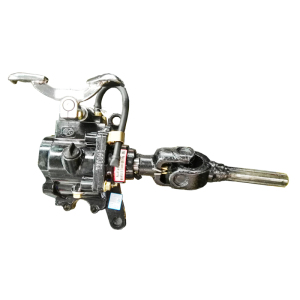
Design of Reverse Gear for Tricycle Motorcycle
Category: Gasoline EngineBrowse number: 133Number:Release time: 2025-10-21 11:43:05$20.40 ≥20 Piece/Pieces
News
Category:
No search results found!
Case
Category:
No search results found!
Video
Category:
No search results found!
Download
Category:
No search results found!
Job
Category:
No search results found!
Featured Products
No search results found!



 Phone: