
 Español
 Portugues
 Pусский
 Français
 العربية
Hydraulic shock absorbers
Hydraulic Shock Absorbers: Function, Design, and Applications Hydraulic shock absorbers are critical components in vehicle suspension systems, designed to dampen vibrations, absorb impacts, and ensure a smooth, controlled ride. By converting kinetic energy from suspension movement into thermal energy (heat), they minimize oscillations and maintain tire contact with the road, enhancing stability, comfort, and safety. Working Principle Hydraulic shock absorbers operate on the principle of fluid displacement. They consist of a piston moving inside a cylinder filled with hydraulic oil (or a gas-oil mixture). As the piston rod moves, it forces the fluid through small orifices or valves, creating resistance. This resistance dissipates energy as heat, reducing the amplitude of suspension oscillations. Key components include: 1. Piston and Rod: Moves within the cylinder, compressing or extending the fluid. 2. Hydraulic Fluid: Transfers force and provides damping via controlled flow. 3. Valves: Adjustable or fixed orifices regulate fluid flow, determining damping characteristics (e.g., rebound and compression rates). 4. Reservoir/Tube: Compensates for fluid displacement, often with a separating gas chamber (in twin-tube designs). Types of Hydraulic Shock Absorbers 1. Twin-Tube: Features an inner working cylinder and an outer reservoir. Common in standard vehicles due to cost-effectiveness and durability. 2. Mono-Tube: Uses a single cylinder with a floating piston separating oil and gas. Offers better heat dissipation and performance, often used in high-performance or heavy-duty applications. 3. Adjustable: Allows manual or automatic tuning of damping force (e.g., via electronic controls or mechanical knobs) for varying road conditions. Performance Factors - Damping Force: Balanced to prevent excessive stiffness (poor comfort) or softness (reduced control). - Fluid Viscosity: Affects response time; specialized oils maintain consistency across temperatures. - Valving Design: Determines compression/rebound behavior; precision-engineered for specific vehicle needs. Applications Hydraulic shock absorbers are used in: - Automobiles: From passenger cars to trucks, ensuring ride comfort and handling. - Motorcycles: Stabilize suspension during braking and cornering. - Industrial Machinery: Isolate vibrations in equipment like presses or conveyors. - Aerospace/Aviation: Absorb landing impacts in aircraft landing gear. Advantages - Reliable and durable with minimal maintenance. - Effective across a wide range of temperatures and loads. - Customizable valving for tailored performance. Challenges - Fluid leakage or seal wear over time reduces efficiency. - Performance degrades if fluid foams under extreme use (addressed via gas-charged designs). Conclusion Hydraulic shock absorbers are indispensable for modern mobility, balancing comfort and control. Ongoing advancements in materials, fluid technology, and adaptive systems continue to enhance their efficiency, ensuring they remain a cornerstone of suspension engineering.
Products
Category:
-
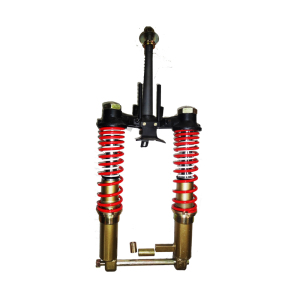
Motorcycle Pre -crossing shock absorption
Category: Gasoline EngineBrowse number: 139Number:Release time: 2025-10-21 11:44:50$67.63 ≥50 Piece/Pieces
News
Category:
No search results found!
Case
Category:
No search results found!
Video
Category:
No search results found!
Download
Category:
No search results found!
Job
Category:
No search results found!
Featured Products
No search results found!



 Phone: