
 Español
 Portugues
 Pусский
 Français
 العربية
Pneumatic shock absorber
Pneumatic Shock Absorber: Function and Applications A pneumatic shock absorber is a device designed to absorb and dampen kinetic energy from impacts, vibrations, or sudden movements using compressed air or gas as the primary damping medium. Unlike hydraulic or mechanical shock absorbers, pneumatic variants rely on the compressibility and controlled release of gas to provide smooth, adjustable, and efficient energy dissipation. These shock absorbers are widely used in automotive, industrial, aerospace, and machinery applications where precise damping and lightweight performance are essential. Working Principle The pneumatic shock absorber operates by converting kinetic energy into potential energy stored in compressed gas. When an external force is applied, a piston or diaphragm compresses the gas within a sealed chamber, increasing its pressure. The resistance created by the compressed gas slows down the motion, absorbing the shock. Once the force is removed, the gas expands, returning the system to its original position. Some designs incorporate valves or adjustable orifices to regulate airflow, allowing for tunable damping characteristics. Key Advantages 1. Lightweight Construction: Since air or inert gases (e.g., nitrogen) are used instead of hydraulic fluids, pneumatic shock absorbers are generally lighter, making them ideal for applications where weight reduction is critical. 2. Adjustable Damping: By modifying gas pressure or flow restrictions, the damping response can be fine-tuned for different loads or operating conditions. 3. Low Maintenance: Without hydraulic fluid, there is no risk of leaks or fluid degradation, reducing maintenance requirements. 4. Clean Operation: Pneumatic systems avoid oil contamination, making them suitable for food processing, medical equipment, or cleanroom environments. Applications - Automotive: Used in suspension systems, seat dampers, and cargo handling to improve ride comfort. - Industrial Machinery: Protects equipment from vibrations in presses, robotic arms, and conveyor systems. - Aerospace: Deployed in landing gear and vibration isolation systems for aircraft. - Consumer Electronics: Dampens motion in camera stabilizers and precision instruments. Limitations Pneumatic shock absorbers may struggle with extreme loads or high-frequency vibrations compared to hydraulic systems. Temperature fluctuations can also affect gas pressure, requiring compensation mechanisms. In summary, pneumatic shock absorbers offer a versatile, lightweight, and low-maintenance solution for damping applications across multiple industries. Their adaptability and efficiency make them a preferred choice where precision and cleanliness are paramount.
Products
Category:
-
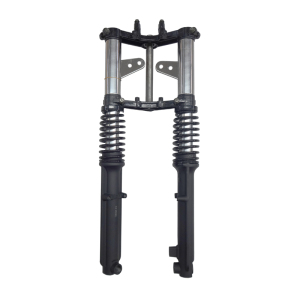
∮50 shock absorption (with spring and reinforcement)
Category: Gasoline EngineBrowse number: 143Number:Release time: 2025-10-21 11:41:09$48.31 ≥50 Piece/Pieces
News
Category:
No search results found!
Case
Category:
No search results found!
Video
Category:
No search results found!
Download
Category:
No search results found!
Job
Category:
No search results found!
Featured Products
No search results found!



 Phone: