
 Español
 Portugues
 Pусский
 Français
 العربية
power to a three wheeled motorcycle
Powering a Three-Wheeled Motorcycle A three-wheeled motorcycle, often referred to as a trike, combines the agility of a traditional motorcycle with the stability of an extra wheel. The power delivery system in such a vehicle is crucial for performance, efficiency, and rider experience. Unlike conventional two-wheeled motorcycles, trikes require a powertrain that balances torque distribution, weight management, and handling dynamics. Engine and Powertrain Most three-wheeled motorcycles are powered by internal combustion engines (ICE), though electric powertrains are becoming increasingly popular. ICE trikes typically use single- or twin-cylinder engines, with displacements ranging from 300cc to over 1,800cc, depending on the intended use. Larger engines provide higher torque, which is beneficial for carrying passengers or cargo. The engine is usually mounted longitudinally or transversely, connected to the rear wheels via a driveshaft, belt, or chain drive. Some models feature a differential to ensure smooth power distribution between the two rear wheels, especially during turns. Electric trikes, on the other hand, utilize high-capacity battery packs and electric motors, offering instant torque and silent operation. Regenerative braking helps extend range, making them ideal for urban commuting. Transmission and Drivetrain Three-wheeled motorcycles often use sequential manual transmissions, automatic transmissions, or continuously variable transmissions (CVT). A CVT is particularly common in utility-focused trikes, as it provides seamless acceleration without gear shifts. The drivetrain must efficiently transfer power to the wheels while compensating for the additional weight and traction demands of a third wheel. Some trikes feature reverse gear, which is rare in two-wheeled motorcycles but useful given their heavier build. Handling and Stability The power delivery must account for the trike’s unique handling characteristics. Unlike bikes, trikes do not lean into turns, so excessive power to one wheel can cause instability. Modern trikes often incorporate traction control and electronic stability systems to prevent wheel spin or loss of control. Additionally, the weight distribution between the front and rear axles affects acceleration and braking performance. A well-balanced trike ensures that power is used efficiently without compromising safety. Performance and Efficiency The power output of a trike must strike a balance between performance and fuel efficiency. Overpowering a trike can lead to excessive fuel consumption, while insufficient power may result in sluggish acceleration. Aerodynamics also play a role, as the wider rear axle increases drag compared to a two-wheeled bike. Engineers optimize engine mapping and gear ratios to maximize efficiency without sacrificing rideability. Conclusion Powering a three-wheeled motorcycle involves careful engineering to ensure smooth acceleration, stability, and efficiency. Whether using a traditional combustion engine or an electric motor, the powertrain must be tailored to the trike’s unique design. With advancements in drivetrain technology and electronic aids, modern trikes offer a compelling blend of performance and practicality for riders seeking an alternative to conventional motorcycles.
Products
Category:
-
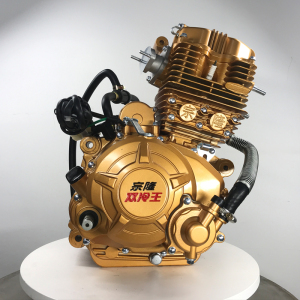
200CC Different motor tricycle engines
Category: Gasoline EngineBrowse number: 128Number:Release time: 2025-10-21 11:05:04$214.51 ≥20 Piece/Pieces
News
Category:
No search results found!
Case
Category:
No search results found!
Video
Category:
No search results found!
Download
Category:
No search results found!
Job
Category:
No search results found!
Featured Products
No search results found!



 Phone: