
 Español
 Portugues
 Pусский
 Français
 العربية
Principle of Tricycle Motorcycle Engine
Principle of Tricycle Motorcycle Engine A tricycle motorcycle engine operates on the fundamental principles of internal combustion, converting fuel into mechanical energy to power the vehicle. Most tricycle motorcycles use single-cylinder or twin-cylinder engines, which are compact, efficient, and suitable for carrying moderate loads. The engine works through a series of coordinated processes: intake, compression, combustion, and exhaust. 1. Intake Stroke The engine cycle begins with the intake stroke. As the piston moves downward, the intake valve opens, allowing a mixture of air and fuel (in carbureted engines) or just air (in fuel-injected engines) to enter the combustion chamber. The fuel-air mixture is crucial for efficient combustion. 2. Compression Stroke Next, the piston moves upward, compressing the air-fuel mixture. This compression increases the mixture’s temperature and pressure, making it more volatile and ready for ignition. The compression ratio—the volume of the cylinder when the piston is at the bottom versus the top—plays a key role in engine efficiency and power output. 3. Combustion Stroke (Power Stroke) At the top of the compression stroke, the spark plug ignites the compressed mixture, causing a controlled explosion. The rapid expansion of gases forces the piston downward, converting chemical energy into mechanical motion. This movement rotates the crankshaft, which transfers power to the transmission and ultimately to the wheels. 4. Exhaust Stroke Finally, the piston moves upward again, pushing the burnt gases out through the open exhaust valve. The exhaust system then expels these gases, completing the four-stroke cycle. Cooling & Lubrication Since tricycle engines often operate under heavy loads, cooling is essential. Air-cooled engines rely on fins to dissipate heat, while liquid-cooled engines use a radiator and coolant. Lubrication is also critical—oil circulates through the engine to reduce friction and prevent overheating. Transmission & Power Delivery Most tricycle engines use a manual or automatic transmission to adjust speed and torque. The power is transmitted via a chain, belt, or shaft drive to the rear wheels, ensuring smooth acceleration and load-carrying capability. In summary, the tricycle motorcycle engine functions through a precise sequence of strokes, supported by cooling, lubrication, and power transmission systems. Its design balances efficiency, durability, and performance to meet the demands of three-wheeled transportation.
Products
Category:
-
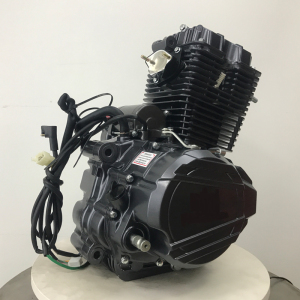
Principle of Tricycle Motorcycle Engine
Category: Gasoline EngineBrowse number: 139Number:Release time: 2025-10-21 11:10:23$165.46 ≥20 Piece/Pieces
News
Category:
No search results found!
Case
Category:
No search results found!
Video
Category:
No search results found!
Download
Category:
No search results found!
Job
Category:
No search results found!
Featured Products
No search results found!



 Phone: