
 Español
 Portugues
 Pусский
 Français
 العربية
three wheel enclosed buses
Three-Wheeled Enclosed Buses: A Compact and Efficient Urban Transport Solution Three-wheeled enclosed buses represent an innovative approach to urban public transportation, offering a balance between efficiency, cost-effectiveness, and environmental sustainability. These vehicles, characterized by their compact design and enclosed cabin, are particularly well-suited for navigating congested city streets, narrow lanes, and areas with limited infrastructure. Design and Structure Unlike traditional four-wheeled buses, three-wheeled enclosed buses feature a single front wheel and two rear wheels, reducing their overall footprint while maintaining stability. The enclosed cabin ensures passenger comfort and protection from weather conditions, making them a practical choice for all seasons. The streamlined body design minimizes air resistance, improving fuel efficiency. Seating arrangements typically accommodate 8–15 passengers, depending on the model, with standing room in some configurations. Advantages 1. Maneuverability: The three-wheeled design allows for tighter turning radii, making these buses ideal for crowded urban environments where larger vehicles struggle. 2. Fuel Efficiency: With a lighter frame and smaller engine, these buses consume less fuel compared to conventional buses, reducing operational costs. 3. Lower Emissions: Many models are electric or hybrid, contributing to cleaner air in cities by minimizing exhaust emissions. 4. Affordability: Lower manufacturing and maintenance costs make them an economical option for public transport operators. 5. Accessibility: Their compact size enables service in areas where standard buses cannot operate, improving connectivity in underserved neighborhoods. Applications Three-wheeled enclosed buses are versatile and can be deployed in various settings: - Last-Mile Connectivity: Bridging gaps between major transit hubs and residential areas. - Tourist Shuttles: Providing convenient transport in heritage zones or pedestrian-heavy districts. - Campus or Industrial Use: Serving large facilities, airports, or corporate complexes with internal shuttle services. Challenges Despite their benefits, these buses face limitations in speed and passenger capacity, making them unsuitable for high-capacity routes. Safety concerns, such as stability at higher speeds, also require careful engineering solutions. Future Potential As cities prioritize sustainable mobility, three-wheeled enclosed buses could play a key role in reducing traffic congestion and pollution. Advances in battery technology and autonomous driving may further enhance their viability. In conclusion, three-wheeled enclosed buses offer a smart, adaptable solution for modern urban transport needs, combining practicality with eco-friendly benefits. Their adoption could revolutionize short-distance public transit in growing cities worldwide.
Products
Category:
-
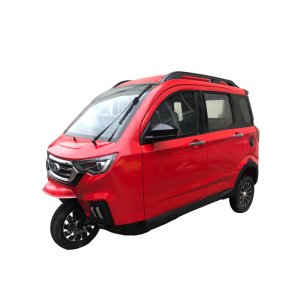
Three wheeled passenger transport-K300W
Category: Passenger TricycleBrowse number: 142Number:Release time: 2025-10-21 10:42:40$2905.28 ≥4 Piece/Pieces
News
Category:
No search results found!
Case
Category:
No search results found!
Video
Category:
No search results found!
Download
Category:
No search results found!
Job
Category:
No search results found!
Featured Products
No search results found!



 Phone: