
 Español
 Portugues
 Pусский
 Français
 العربية
two stroke and four stroke engines
Two-Stroke vs. Four-Stroke Engines: A Comparative OverviewInternal combustion engines are broadly categorized into two-stroke and four-stroke designs, each with distinct operating principles, advantages, and drawbacks. Understanding their differences is essential for applications ranging from small tools to automotive and marine propulsion. 1. Basic Operation Four-Stroke Engines complete a power cycle in four piston strokes (intake, compression, power, and exhaust), requiring two full crankshaft revolutions per cycle. Air-fuel mixture enters the cylinder during the intake stroke, is compressed, ignited (via spark plug or compression), and exhaust gases are expelled. This design ensures efficient combustion and lower emissions but involves more moving parts (e.g., valves, camshafts). Two-Stroke Engines compress the cycle into two strokes (upward and downward piston movements) within one crankshaft revolution. Intake and exhaust occur simultaneously near the bottom of the piston stroke, using ports instead of valves. The air-fuel mixture is often mixed with oil for lubrication. This simplicity allows higher power-to-weight ratios but sacrifices fuel efficiency and cleanliness. 2. Performance and Efficiency - Power Output: Two-stroke engines produce power twice as frequently per revolution, delivering higher torque at similar displacements. This makes them ideal for lightweight, high-RPM applications like chainsaws or dirt bikes. Four-stroke engines, while less powerful per cycle, offer smoother operation and better low-RPM torque, suited for cars and generators. - Fuel Efficiency: Four-stroke engines excel here, as they avoid the loss of unburned fuel during exhaust. Two-strokes lose some fuel through scavenging, increasing consumption and emissions. - Emissions: Four-strokes meet stricter environmental standards due to precise valve timing and reduced oil burning. Two-strokes emit more hydrocarbons and particulate matter. 3. Maintenance and Durability - Complexity: Four-strokes have more components (e.g., valves, oil pumps), raising maintenance costs but improving longevity. Two-strokes are simpler but wear faster due to oil-mixed fuel and higher thermal stress. - Lubrication: Four-strokes use dedicated oil systems, while two-strokes rely on fuel-oil mixtures, requiring frequent oil refills and leading to carbon buildup. 4. Applications - Two-Stroke: Preferred where weight and power density matter—e.g., outboard motors, mopeds, and handheld tools. Their simplicity also benefits remote or low-cost applications. - Four-Stroke: Dominates automotive, industrial, and stationary power due to efficiency, durability, and compliance with emission norms. Conclusion The choice between two- and four-stroke engines hinges on trade-offs between power, efficiency, and environmental impact. While two-strokes offer raw performance in compact designs, four-strokes provide refined, sustainable operation for broader uses. Advances in hybrid and electric technologies may reshape this landscape, but these engine types remain vital for diverse mechanical needs.
Products
Category:
-
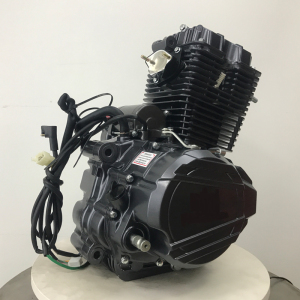
Principle of Tricycle Motorcycle Engine
Category: Gasoline EngineBrowse number: 139Number:Release time: 2025-10-21 11:10:23$165.46 ≥20 Piece/Pieces
News
Category:
No search results found!
Case
Category:
No search results found!
Video
Category:
No search results found!
Download
Category:
No search results found!
Job
Category:
No search results found!
Featured Products
No search results found!



 Phone: