
 Español
 Portugues
 Pусский
 Français
 العربية
water-cooled engine cools
Water-Cooled Engine Cooling System: An Overview A water-cooled engine is a type of internal combustion engine that uses liquid coolant—typically a mixture of water and antifreeze—to regulate its operating temperature. This cooling method is highly efficient and widely used in automotive, marine, and industrial applications. The system ensures the engine operates within an optimal temperature range, preventing overheating while maintaining performance and longevity. Components of a Water-Cooled Engine Cooling System 1. Radiator The radiator is a heat exchanger that dissipates heat from the coolant. As hot coolant flows through its thin tubes, air passing over the fins cools it before it returns to the engine. 2. Water Pump The water pump circulates coolant throughout the system. Driven by the engine’s crankshaft via a belt or chain, it ensures continuous coolant flow between the engine, radiator, and other components. 3. Thermostat The thermostat regulates coolant flow based on engine temperature. It remains closed during cold starts to allow the engine to warm up quickly and opens once the optimal temperature is reached. 4. Coolant A mixture of water and antifreeze (ethylene or propylene glycol) serves as the cooling medium. Antifreeze prevents freezing in cold climates, raises the boiling point, and inhibits corrosion. 5. Cooling Fans Electric or belt-driven fans enhance airflow through the radiator, especially at low speeds or idle when natural airflow is insufficient. 6. Hoses and Pipes Rubber hoses and metal pipes transport coolant between components, ensuring a sealed and pressurized system. How the System Works When the engine runs, combustion generates excess heat absorbed by the coolant circulating through passages in the engine block and cylinder head. The heated coolant flows to the radiator, where it releases heat to the outside air. The cooled liquid then returns to the engine, repeating the cycle. Advantages of Water Cooling - Efficiency: Water’s high heat capacity allows effective heat transfer. - Temperature Control: Maintains stable engine temperatures under varying loads. - Noise Reduction: Quieter than air-cooled engines, as water absorbs vibrations. - Compact Design: Enables tighter engine packaging without large external fins. Maintenance Considerations - Regularly check coolant levels and quality. - Inspect hoses for leaks or cracks. - Ensure the radiator remains unobstructed for proper airflow. - Replace the thermostat if overheating or slow warm-up occurs. Conclusion Water-cooled engines offer superior thermal management compared to air-cooled alternatives, making them ideal for high-performance and high-efficiency applications. Proper maintenance ensures reliability, performance, and extended engine life.
Products
Category:
-
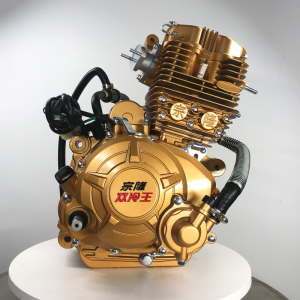
Fuel powered tricycle engine
Category: Gasoline EngineBrowse number: 127Number:Release time: 2025-10-21 11:07:52$255.09 ≥20 Piece/Pieces
News
Category:
No search results found!
Case
Category:
No search results found!
Video
Category:
No search results found!
Download
Category:
No search results found!
Job
Category:
No search results found!
Featured Products
No search results found!



 Phone: